Commercial Water Treatment in Boynton Beach, FL
Systems, servicing, and maintenance contracts for Boynton Beach businesses — condo and HOA associations, restaurants, medical and dental offices, Quantum Park facilities, salons, and hospitality properties. We service equipment from any installer and start every job with a free on-site water test, so the system is specified for the water your property actually receives.
Free Commercial Water Assessment
Tell us about your Boynton Beach business or property and we'll schedule an on-site water test and equipment review — no cost, no obligation.
100% free · No obligation · Results in 45 minutes
Boynton Beach's Water, From a Commercial Point of View
Boynton Beach Utilities supplies about 112,000 customers, which is more people than live inside city limits, from 30 City-owned wells in the East Coast Surficial Aquifer, 50 to 240 feet deep. The water goes through one of two very different plants. The East Water Treatment Plant at Seacrest Boulevard and Woolbright Road treats up to 24 million gallons a day with lime softening and sand filtration, and since 2017 a Magnetic Ion Exchange (MIEX) step pretreats water piped in from the western wellfield through a 6-mile line, stripping color and organics and some of the mineral content. The West Water Treatment Plant pushes western-wellfield water through nanofiltration membranes at an annual average of about 10.4 million gallons a day. The two outputs are blended in one distribution system and disinfected with chloramine.
"Meets standards" and "right for commercial equipment" are two different questions. Ice machines, combi ovens, boilers, sterilizers, misting systems, and wash-down equipment are far more sensitive to residual hardness, chlorine or chloramine residual, and dissolved solids than a kitchen tap. The blend also moves with the seasons: from December through May the City relies heavily on its western wellfield and on treated water stored in its Aquifer Storage and Recovery wells, which protects the eastern wells from saltwater intrusion. A softener programmed once in August can be set wrong by February, which is exactly why a catalog-spec, set-and-forget system so often disappoints here.
So we never quote from a zip code. Every Boynton Beach commercial job starts with an on-site test of your actual incoming water — hardness, chlorine residual, TDS, iron, pH — and an inspection of the equipment the water feeds. You get the results and a written proposal, and the system is sized to your peak flow, not a generic average.
Boynton Beach's 2025 Water Report, Matched to the Equipment It Hits
The City's 2025 Water Quality Report shows no MCL violations. Compliance is measured for people drinking the water, though, and commercial equipment reacts to the same numbers in its own way. Here is how we read the report for the kinds of Boynton Beach properties we work in most:
- Ice machines, coffee and fountain drinks (restaurants, clubs, offices). Chloramine ran a 2.84 ppm running annual average in 2025, but individual readings ranged from 0.02 to 5.2 ppm, and total trihalomethanes averaged 24.1 ppb (up to 35.3) with haloacetic acids at 17.9 ppb. Those swings are what customers taste. The report also lists PFOS at a reported 26.5 parts per trillion (0.38 to 31 ppt), PFOA at 8.8 ppt and five other PFAS at roughly 6 to 9 ppt each. Our usual beverage setup is catalytic carbon for the chloramine and by-products, with reverse osmosis on the ice and drink lines where PFAS is a concern. For context, neighboring Boca Raton reported PFOS of 5.8 to 7.1 ppt.
- Boilers, water heaters, dish machines and combi ovens. These care about hardness, and the City does not publish a hardness figure. Lime softening at the East plant lowers hardness without removing it, and nanofiltration from the West plant removes more, so your hardness depends on the blend reaching your meter that season. We measure it on site and size the softener from that reading, with a metered valve so regeneration follows actual gallons used.
- Sterilizers, autoclaves and lab water (Bethesda Hospital East corridor medical and dental offices). Sodium measured 43.2 ppm (36.6 to 43.2), which the City attributes to saltwater intrusion and leaching from soil, and it adds to the dissolved-solids load an RO or DI system has to strip out. We size RO membranes and DI tanks to your measured TDS and document conductivity at every visit for your compliance file. The same report notes one positive total coliform sample in December 2025 that triggered the required assessment (no treatment-technique violation), which is a reminder that point-of-use systems in clinical settings need scheduled sanitization, not just filter changes.
- Condo and HOA buildings east of Federal Highway and along the Intracoastal. The City reports no lead service lines and no galvanized lines requiring replacement in its distribution system, and 2025 tap sampling found 90th-percentile lead at 4.4 ppb and copper at 0.13 ppm, under the action levels. In older buildings the variable is the building's own risers and fixtures, so we sample at units as well as at the meter before a board decides between central treatment and point-of-use RO.
- Fluoride-sensitive processes. Fluoride averaged 0.12 ppm (0.03 to 0.21) and is not added by the City, so it is rarely a design factor here, unlike cities that fluoridate.
Every figure above comes from the City of Boynton Beach's published 2025 Water Quality Report. Properties with a Boynton Beach address that are billed by a different utility get their own test, because these numbers will not apply to them. The name on the water bill settles which utility you are on.
Plan Commercial Service Around Boynton's Chlorine Maintenance Weeks
Boynton Beach uses chloramine most of the year because it lasts longer in the pipes and causes fewer taste and odor complaints. Once or twice a year, for about three weeks, the City switches the distribution system to free chlorine to keep it clean. For a home that means a pool smell for a few weeks. For commercial equipment it is a predictable stress test:
- RO membranes. Thin-film composite membranes have almost no tolerance for free chlorine. The carbon in front of them is the only protection, so a carbon bed that is near exhaustion going into a maintenance window is how membranes get ruined in Boynton. We test for chlorine breakthrough after the carbon before each scheduled window.
- Carbon media. Free chlorine and chloramine load carbon differently, and the switch back to chloramine afterward is when an undersized bed shows it. We schedule carbon change-outs so they are not due in the middle of a switch, and we size catalytic carbon for the 5.2 ppm chloramine peaks the City recorded in 2025, not the average.
- Ice and beverages. Untreated or under-treated ice picks up a chlorine taste within days of the switch. That is usually the first call we get from a restaurant during a maintenance window, and it is almost always an exhausted carbon cartridge.
- Dialysis, aquariums and specialty uses. The City's own chlorine-maintenance FAQ notes that chlorine and chloramine must be removed for dialysis use and can harm fish, and points to proper filters and dechlorination products. Clinics and lobbies with aquariums need dechlorination whether the system is on chloramine or free chlorine.
Maintenance-contract accounts get these checks automatically. See our carbon media service and commercial RO maintenance pages for what each visit covers.
The Drain Side: Brine, RO Reject and Boynton's Pretreatment Program
Commercial water treatment sends water down the drain as well as to your equipment. Softeners discharge brine when they regenerate, RO systems send concentrate to drain, and carbon and media filters backwash. Boynton Beach runs a federally mandated Industrial Pretreatment Program that controls what non-residential users discharge into the City's sanitary sewer, with permits, inspections and sampling. Its definition of a Significant Industrial User starts at 25,000 gallons or more of process wastewater a day, so most of our customers are well below it, but larger Quantum Park and Congress Avenue facilities should know where they stand.
Restaurants are already in a City program. Boynton's Fats, Oils and Grease program covers more than 300 local facilities, including restaurants, assisted living homes and schools, that maintain grease interceptors. Treatment equipment does not change your interceptor obligations, but a softener or dish-machine system that regenerates far more often than it needs to adds avoidable water and salt to the same drain lines.
That is a design choice we make on purpose: metered, demand-initiated regeneration instead of timers, RO recovery set to your measured feed water rather than the factory default, and backwash schedules matched to actual pressure drop. On request we write the expected regeneration and reject volumes into your proposal so your facility manager has the numbers if the question ever comes up.
Boynton Beach Businesses We Serve
From Intracoastal condo associations to Quantum Park facilities — commercial water treatment specified for how your operation actually uses water.
Condo & HOA Associations
Boynton Beach has one of the densest concentrations of condo and HOA communities in Palm Beach County, from the Intracoastal buildings east of Federal Highway to the large west-side associations off Boynton Beach Boulevard. One central point-of-entry system protects every unit’s plumbing, water heaters, and shared mechanical equipment — and we write proposals boards can take straight into a budget meeting.
Restaurants & Cafés
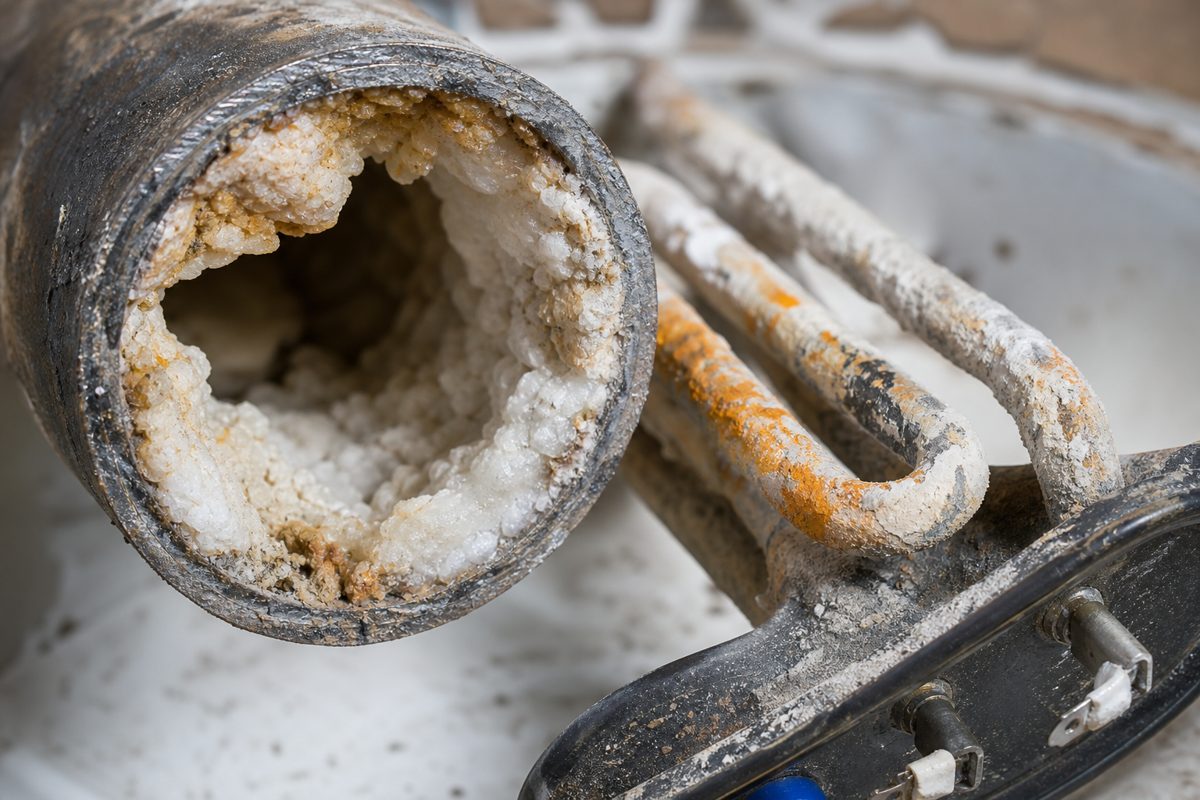
Scale is the number-one killer of ice machines, steamers, combi ovens, and dish machines in a South Florida kitchen, and carbon filtration decides whether coffee, tea, and ice taste right. We spec softening and carbon for peak service-hour flow, not the daily average — and schedule work around your service window.
Medical & Dental Offices
The medical corridor around Bethesda Hospital East runs sterilizers, autoclaves, and lab equipment that need consistent, documented water quality — usually RO or DI polishing with conductivity monitoring. Every service visit comes with written test results suitable for compliance records.
Quantum Park & Light Industrial
Boynton’s Quantum Park and the Congress Avenue industrial corridor run process water, cooling equipment, rinse lines, and wash-down systems. These are flow-rate and water-chemistry problems, not catalog purchases, so we size from measured peak demand and the tolerance of the equipment downstream.
Salons, Spas & Car Washes
Hard water shows up fastest where water touches skin, hair, or paint: dull color results, spotting, and constant re-work. A right-sized softener plus carbon stage usually pays for itself in chemical and re-wash savings before it does in equipment life.
Marinas, Clubs & Hospitality
Wash-down water, ice, and guest-facing drinking water all come off the same service line. We separate those needs into the right stages — softening for equipment, carbon and RO for anything people drink — instead of oversizing one system to do everything.
Installation Is Half the Job — Servicing Is the Other Half
A commercial system that's out of spec rarely fails outright. It degrades quietly: carbon media exhausts and chlorine breaks through, softened water goes hard mid-shift, RO permeate TDS climbs, pressure drop starves the equipment downstream. By the time staff notice, the damage is usually already done — scaled boilers, spotted glassware, a dead ice machine during the season.
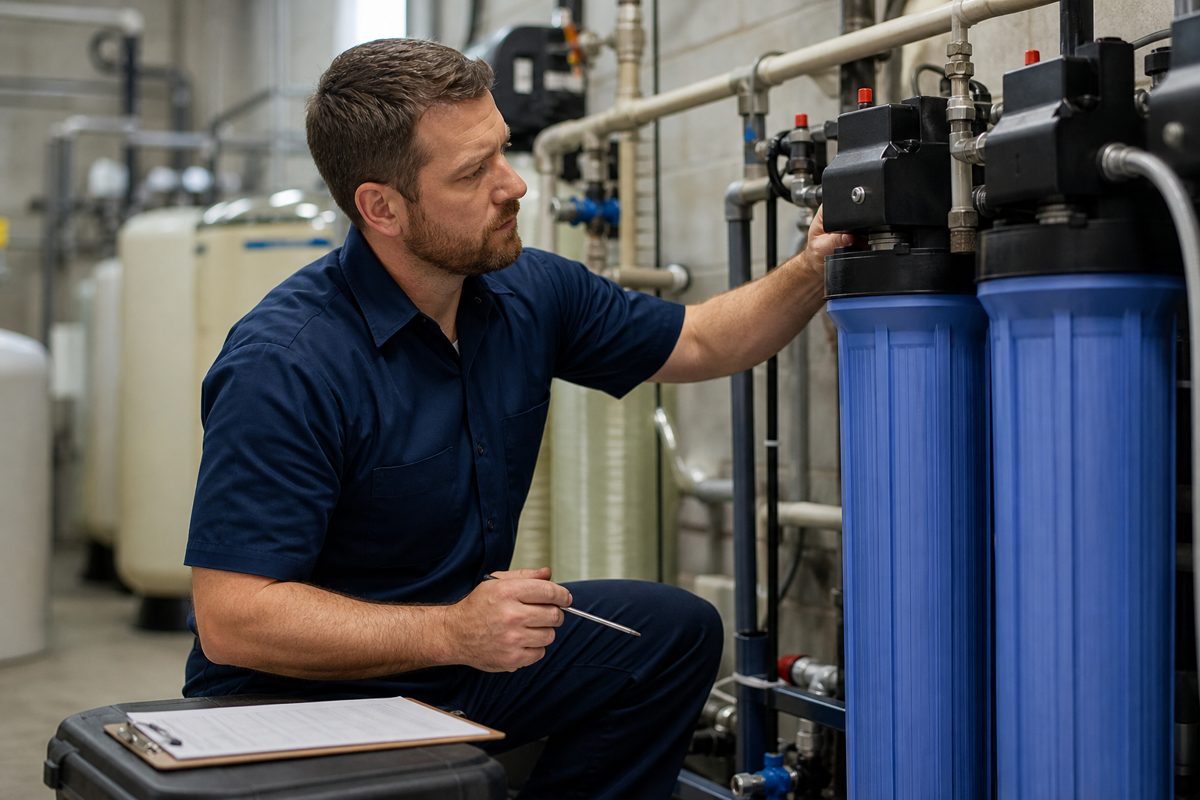
Our Boynton Beach commercial servicing covers carbon media testing and rebeds, softener resin rebeds, RO membrane maintenance, DI filter service, control-valve rebuilds, sanitization, and pressure and flow verification — with written test results at every visit for your compliance records. Most accounts run on an annual maintenance contract so nobody has to remember the schedule.
We also take over orphaned systems. If the company that installed your equipment no longer services Boynton Beach — or no longer exists — we'll assess what's there and service it, whatever the brand.
How Commercial Work Runs in Boynton Beach
Built around your operating hours and approval process — not a walk-in sales pitch.
Free On-Site Assessment
We test your incoming water and inspect existing equipment at your Boynton Beach property — no cost, no obligation.
Written Proposal
Clear options and pricing in writing, suitable for an owner's decision, a board meeting, or a manager's approval chain.
Installation Around Your Schedule
Work planned around service hours, tenant access, or resident impact — typically completed in one to two days.
Maintenance Contract
Scheduled service, documented testing, and priority emergency response so the system stays in spec year-round.
Commercial Services & Related Pages
530 Customers Gave Us 5 Stars
Palm Beach County's most trusted water treatment company — rated 5.0 stars across 530 verified Google reviews.
530 Reviews on Google →“Called three companies before SWS. They were the only ones who tested our water BEFORE trying to sell us anything. That honesty earned our business immediately.”
“After their specialist came out and analyzed our water, we installed the whole-home RO. The difference is immediately noticeable — water tastes completely different and our skin has been less dry.”
“They came the same day I called, tested our water, and had a quote within an hour. Install was clean and fast. No upselling, no pressure. Just honest service.”
“I was skeptical about the financing but they walked me through everything. 0% for 12 months, system installed the next day. Best home improvement we’ve ever made.”
“Our Wellington water was destroying our fixtures. SWS installed a softener and whole-home filter — no more white spots, no more chemical smell. Should have done this years ago.”
“We have well water in The Acreage with terrible sulfur smell. Their AirGuard system completely eliminated it. Our water is crystal clear now.”
Commercial Water Treatment in Boynton Beach — FAQ
Common questions from Boynton Beach business owners, property managers, and association boards.
Yes — that is a large share of our commercial work. We service commercial equipment regardless of the original installer, including Kinetico, Culligan, Pelican, and RainSoft systems. If the company that installed your equipment is gone or unresponsive, we’ll assess what’s there, tell you honestly whether it is worth maintaining or replacing, and service it either way.
Free Commercial Water Assessment
Tell us about your Boynton Beach property and we'll schedule an on-site test — no cost, no obligation.
100% free · No obligation · Results in 45 minutes
Protect the Equipment Your Business Runs On
Request a free commercial water assessment anywhere in Boynton Beach. We'll test your water, inspect existing equipment, and put options and pricing in writing — no pressure.