Water Softener Installation, Repair & Service in Palm Beach County
New softeners sized from a real hardness test, plus repair, resin re-beds and maintenance on any brand — Kinetico, Culligan, Pelican, RainSoft, Whirlpool. Free on-site water test.
Get a Free Quote for Water Softeners
Book your free water test today. No pressure, no obligation — just clean, safe water for your family.
100% free · No obligation · Results in 45 minutes
Common Water Problems We Solve
Hard Water Scale
White crusty buildup on faucets, showerheads, and inside pipes
Dry Skin & Hair
Hard water strips natural oils, causing itchy skin and brittle hair
Appliance Damage
Scale buildup reduces efficiency and shortens the life of water heaters, dishwashers, and washing machines
Soap Scum
Hard water prevents soap from lathering properly, leaving residue on dishes, clothes, and skin
Water softener pricing — published
What a whole-home water softener costs in Palm Beach County: from $2,990 installed.
Our softeners are not sold alone — every system pairs softening resin with catalytic carbon in one tank, so you fix hard water and chloramine at the same time. Every package includes whole-home catalytic carbon filtration, softening, an under-sink reverse osmosis drinking-water system, professional installation and our lifetime guarantee. The free water check confirms sizing — it never changes the price you see here.
Answer both and we highlight the package most homes like yours start with.
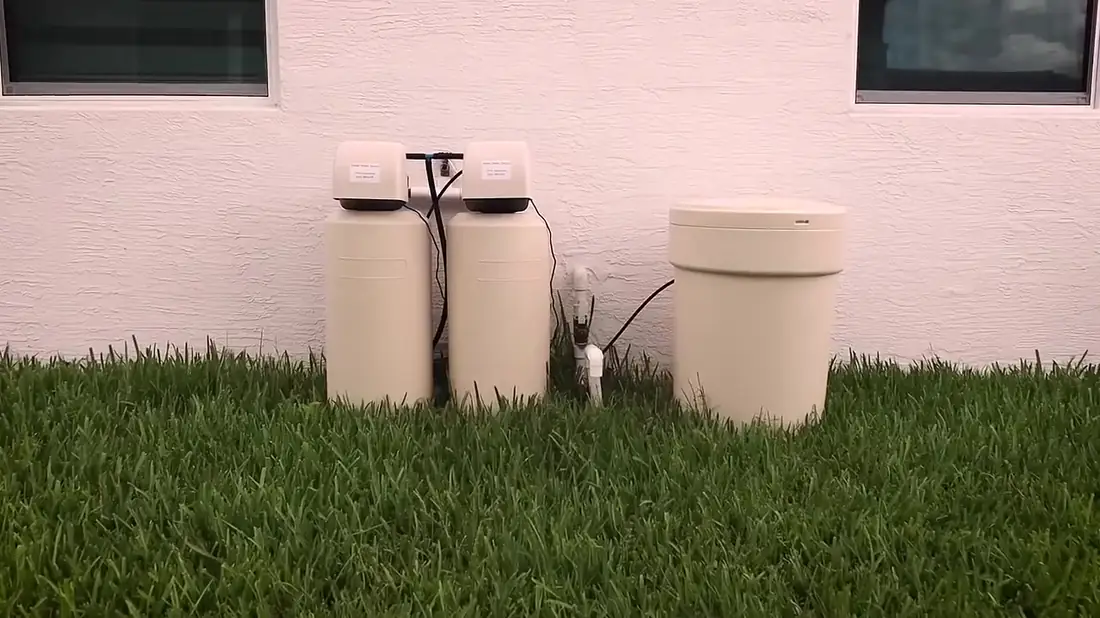
Standard
Single 10x54 mixed-media tank
Best for 1–3 bath homes · 1–4 people · city water
- Whole-home catalytic carbon filtration
- High-capacity softening resin
- Under-sink reverse osmosis drinking water
- Metered, demand-regenerating control valve
- Professional installation & post-install re-test
- Lifetime guarantee
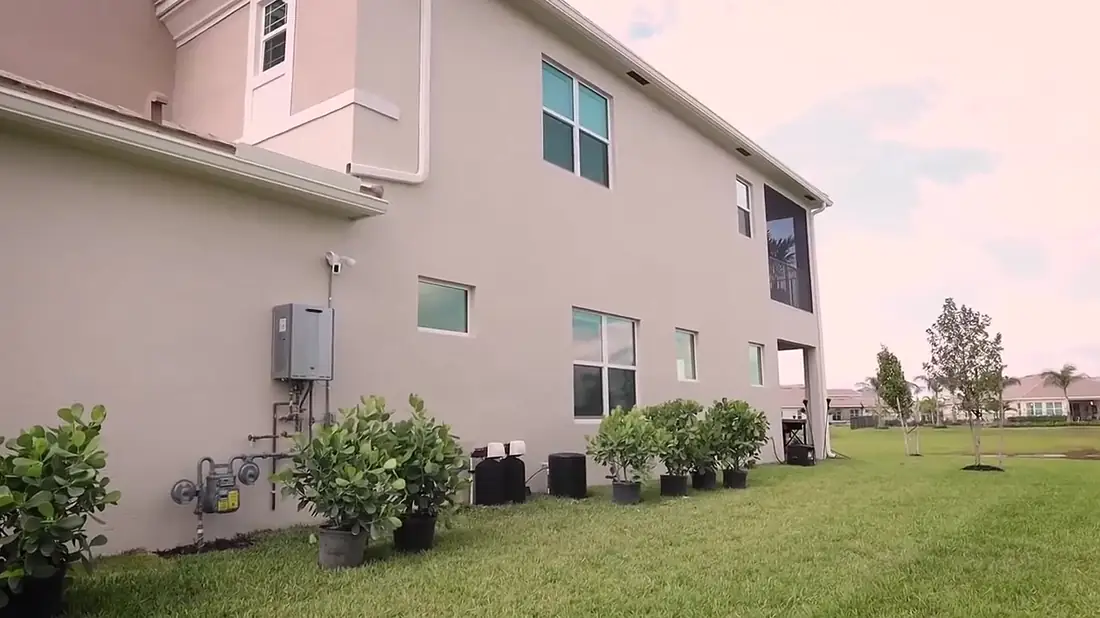
XL
Single 13x54 mixed-media tank
Best for 2–4 bath homes · 2–5 people · higher water use
- Everything in Standard
- Larger tank, more filtration media
- More softening capacity between regenerations
- Under-sink reverse osmosis drinking water
- Professional installation & post-install re-test
- Lifetime guarantee
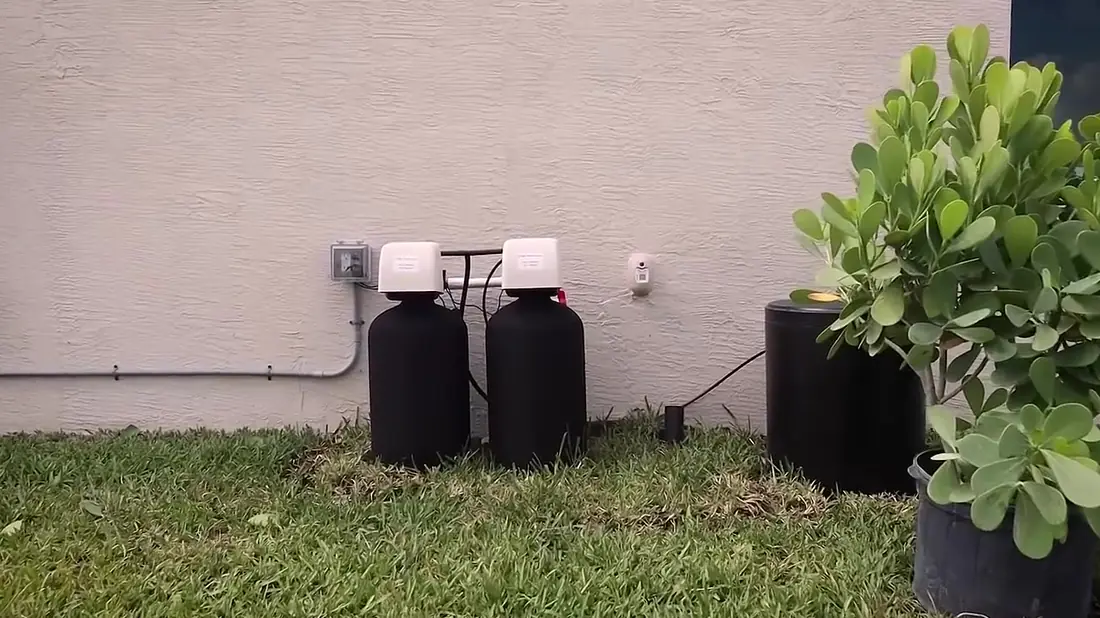
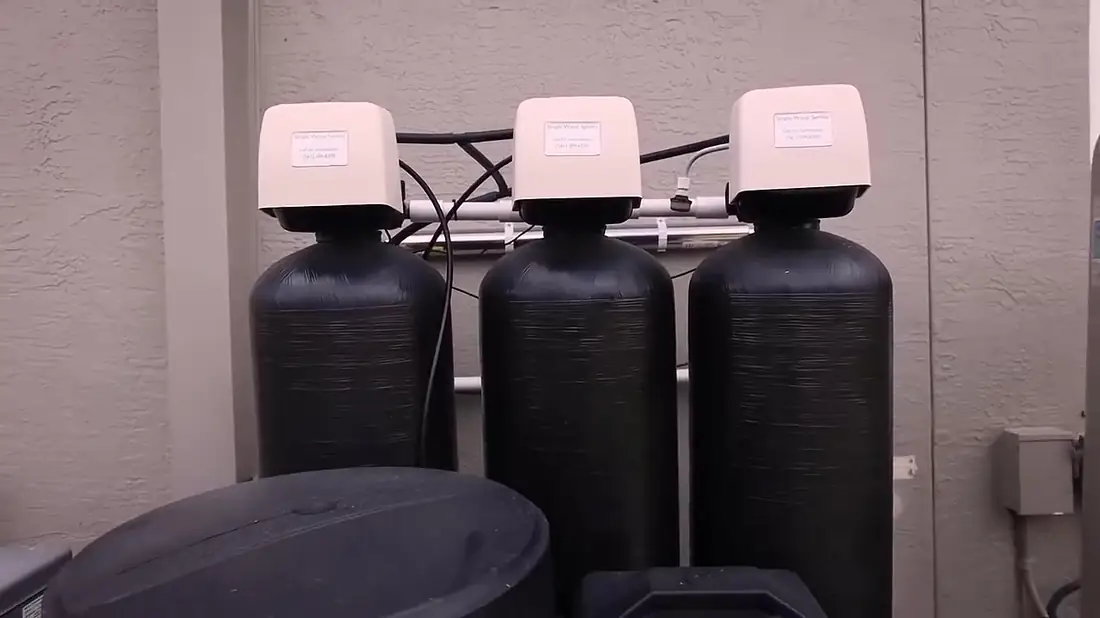
Performance
Dedicated 10x54 carbon + 10x54 softener tanks
Best for 3–5 bath homes · 3–6 people
- Dedicated carbon tank — full contact time for chloramine
- Dedicated softener tank — no media compromise
- Under-sink reverse osmosis drinking water
- Metered, demand-regenerating control valves
- Professional installation & post-install re-test
- Lifetime guarantee
Ultimate
Dedicated 13x54 carbon + 13x54 softener tanks
Best for 4+ bath homes · 4+ people · pool homes, large families
- Maximum filtration capacity
- Maximum softening capacity
- Under-sink reverse osmosis drinking water
- Metered, demand-regenerating control valves
- Professional installation & post-install re-test
- Lifetime guarantee
Why Florida Has Some of the Hardest Water in the Country
Palm Beach County water is notoriously hard and often contaminated with iron, sulfur, and chlorine. Here's what homeowners deal with every day:
What a Water Softener Costs in Palm Beach County
Most Palm Beach County homes spend between $1,500 and $3,400 on a properly sized water softener installed, and $3,200 to $5,500 for a softener paired with whole-home carbon filtration for chloramine taste and odor. Larger homes with five or more bathrooms, or homes needing high peak flow, sit at the upper end because they need a bigger resin bed and a higher-capacity control valve.
Three things actually drive the price: your measured hardness, your peak water demand, and whether the plumbing has a point-of-entry loop already roughed in. Homes in newer communities such as Westlake and parts of Royal Palm Beach usually have a softener loop in the garage, which cuts installation labor roughly in half. Older homes in Lake Worth or Northwood may need new tie-in plumbing.
We give a written quote the same day as your free water test, with no obligation, and we offer financing through several lenders including 0% for 12 months. What we will not do is quote a system before measuring your water — a softener sized from a guess either wastes salt or fails to keep up.
How to Size a Water Softener for a South Florida Home
Sizing is grain capacity, not tank height. You multiply your hardness in grains per gallon by the gallons your household uses per day, then choose a system that can carry several days of that load between regenerations. Every 17.1 ppm of hardness is one grain per gallon, so the number that matters is the one measured at your own tap: Boca Raton and Delray Beach soften at the plant (Boca publishes 65–80 mg/L), while private wells in the western communities are untreated and vary well to well.
As a practical guide: a 2–3 person home on city water is typically a 32,000 grain system, a 4–5 person home is 40,000–48,000 grains, and a large home with high simultaneous demand or well water with iron needs 64,000 grains or a twin-tank setup so soft water never runs out mid-regeneration.
Undersizing is the more common mistake and shows up as scale returning within months, or soft water disappearing when the laundry and two showers run at once. Oversizing wastes salt and water because the resin sits unused between cycles. We size from your actual test numbers and your bathroom count, then program the regeneration schedule to your real usage.
City-specific sizing and install detail: see water softener installation and maintenance in Delray Beach and water softener installation in Parkland, where three different utilities — NSID, Coconut Creek and Parkland Utilities — deliver three different sets of numbers.
Salt-Based vs Salt-Free: What Works on Florida Hard Water
A salt-based ion-exchange softener physically removes calcium and magnesium from the water and replaces them with a small amount of sodium. It is the only technology that genuinely produces soft water — slick lather, no scale, no spotting.
So-called salt-free systems are template-assisted crystallization conditioners. They do not remove hardness minerals; they alter their structure so the minerals are less likely to stick to pipe walls. On moderately hard water they can reduce scale in plumbing, but you will still see spotting on glass and fixtures, and you will not get the soap-lathering or skin-feel benefits homeowners expect. At Palm Beach County hardness levels their performance drops off further.
Our honest recommendation: if your goal is scale prevention only and you cannot run a drain line, a conditioner is a reasonable compromise. If you want soft water — and if you want to protect a tankless water heater — install a salt-based softener. If sodium is a medical concern, we use a potassium chloride setup instead, which softens identically at a higher consumable cost.
Maintenance, Salt, and How Long a Softener Lasts
A softener needs three things: salt in the brine tank, an occasional resin-bed cleaning, and a control valve that is programmed correctly. Most Palm Beach County homes add salt every 4 to 8 weeks. We run a scheduled salt delivery service so full bags arrive and get loaded without you handling them.
Beyond salt, plan on a resin cleaner treatment once or twice a year if your water carries iron, and a professional check of the valve, brine draw, and bypass every couple of years. A well-maintained resin bed lasts 10 to 15 years in this area; control valves are the part that typically fails first and is replaceable without swapping the whole system.
We also service and repair softeners we did not install — Kinetico, Culligan, Pelican, RainSoft, Whirlpool and others — including orphaned systems whose original dealer is out of business. See filter and system maintenance, or call us and we will tell you honestly whether a repair or a replacement is the better spend.
Water Softener Repair in Palm Beach County: The Failures We Fix Most
Most softener service calls in Palm Beach County come down to five problems, and each one has a different fix. We diagnose by testing hardness at a tap before the softener and again after it, then working back from the result rather than replacing parts on a hunch.
1. Salt bridge in the brine tank. Florida garage humidity fuses the top of the salt into a crust. The tank looks full, the salt level never drops, and hard water returns. Breaking the bridge and switching to a higher-purity pellet usually solves it; a brine tank that keeps bridging often has a float or overflow problem too.
2. Control valve that lost its program. Older timer-style valves lose the time of day after a summer storm outage, so regeneration starts at 2 PM instead of 2 AM and the house runs on hard water mid-cycle. Meter-based valves can also stop counting gallons. We reprogram to your measured hardness and household size, and replace the valve when the motor, piston or seals are worn — the tank and resin can stay.
3. Iron-fouled resin. Homes on private wells in The Acreage, Loxahatchee and parts of the western communities send iron into the softener. Iron coats the resin beads and capacity collapses within a couple of years. A resin cleaner treatment can recover a lightly fouled bed; a heavily fouled one needs a re-bed, and the real fix is iron filtration ahead of the softener so it does not happen again.
4. Clogged injector or brine line. Sediment and salt fines block the small venturi that draws brine into the resin tank. The softener goes through the motions of regenerating but never actually recharges. This is usually a same-visit cleaning, not a parts job.
5. Bypass left open. After a water heater swap or a plumbing repair, the softener bypass is often left in the open position and the whole house runs unsoftened. It is the cheapest repair we make, and we check it first.
We repair systems we did not install — Kinetico, Culligan, Pelican, RainSoft, Whirlpool and others — including orphaned units whose original dealer has closed. You get a written price after the diagnosis, and we tell you plainly when a new, correctly sized softener is the better spend — book the free water test and we will size it from real numbers.
Water Softener Maintenance and Service Visits
A softener that is maintained lasts. One that is only ever fed salt tends to fail quietly: hardness creeps back, the water heater and dishwasher start scaling, and nobody notices until the fixtures spot. A service visit from Simple Water Service covers the parts of the system homeowners cannot easily check themselves.
What a service visit includes: a hardness test before and after the softener so you see the result in numbers; a brine-draw check to confirm the tank is actually pulling salt; injector and brine-line cleaning; a check of the bypass valve and drain line; resin cleaner where iron is present; and reprogramming of the regeneration schedule to your current hardness and household size. If anything needs a part, you get a written price before we fit it.
How often, by water source: homes on city water in West Palm Beach, Boca Raton, Delray Beach and Boynton Beach generally need a professional check every couple of years. Homes on private wells with iron — the western communities especially — benefit from resin cleaner once or twice a year and a closer look at the pre-treatment ahead of the softener. Parkland is its own case: depending on the street, water comes from NSID, the City of Coconut Creek or Parkland Utilities, which is why we test instead of assuming.
Salt, handled for you: on our salt delivery route full bags arrive and are loaded into the brine tank, and the technician watches for bridging and low brine levels while they are there. For carbon tanks, cartridges and RO filters on the same system, see filter and system maintenance. City-specific detail: West Palm Beach, Delray Beach and Parkland.
Benefits of Water Softeners
Our Process
Simple, fast, and done at your home.
Water Hardness Test
A certified technician tests your water for hardness, chlorine, TDS, and other key contaminants. You get written results before we recommend anything.
System Sizing
Based on your water test, household size, and plumbing layout, we size the right system. No overselling, no undersizing.
Ion Exchange Installation
Professional installation of your water softener at the point of entry. All plumbing connections, drain line, and electrical handled by our licensed team.
Brine Tank Setup & Programming
We program your system for optimal salt efficiency and regeneration cycles based on your actual water hardness and usage patterns.
532 Customers Gave Us 5 Stars
Palm Beach County's most trusted water treatment company — rated 5.0 stars across 532 verified Google reviews.
532 Reviews on Google →“Called three companies before SWS. They were the only ones who tested our water BEFORE trying to sell us anything. That honesty earned our business immediately.”
“After their specialist came out and analyzed our water, we installed the whole-home RO. The difference is immediately noticeable — water tastes completely different and our skin has been less dry.”
“They came the same day I called, tested our water, and had a quote within an hour. Install was clean and fast. No upselling, no pressure. Just honest service.”
“I was skeptical about the financing but they walked me through everything. 0% for 12 months, system installed the next day. Best home improvement we’ve ever made.”
“Our Wellington water was destroying our fixtures. SWS installed a softener and whole-home filter — no more white spots, no more chemical smell. Should have done this years ago.”
“We have well water in The Acreage with terrible sulfur smell. Their AirGuard system completely eliminated it. Our water is crystal clear now.”
Frequently Asked Questions
Answers to the questions we hear most from Palm Beach County homeowners.
It depends on your water test results. Hard water needs a softener. Chlorine/chloramines need a carbon filter. Most Palm Beach County homes benefit from both — a softener plus whole-home carbon filtration.
Book a Free Water Test
Book your free water test today. No pressure, no obligation — just clean, safe water for your family.
100% free · No obligation · Results in 45 minutes
Clean Water Today.
Claim your $500 system credit today. Our specialists are ready to help homeowners across Palm Beach County finally get clean, soft water — and save $500 doing it.
Financing available · As low as $0 down · As low as $49/month for whole-home systems